My practice moves between pipa performance, music creation and screen media. I work with the pipa—a four-stringed Chinese lute—through live improvisation, contemporary band performance and music for moving images and exhibitions.
I explore how traditional Chinese music can take on new life through contemporary audiovisual media and emerging technologies. These projects also inform my research into screen media, music and sound culture, and the cultural industries: how sound, performance and images shape cultural experience.
The thread is the same: how music can change the way we encounter a place, a painting or a story.
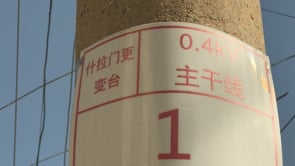
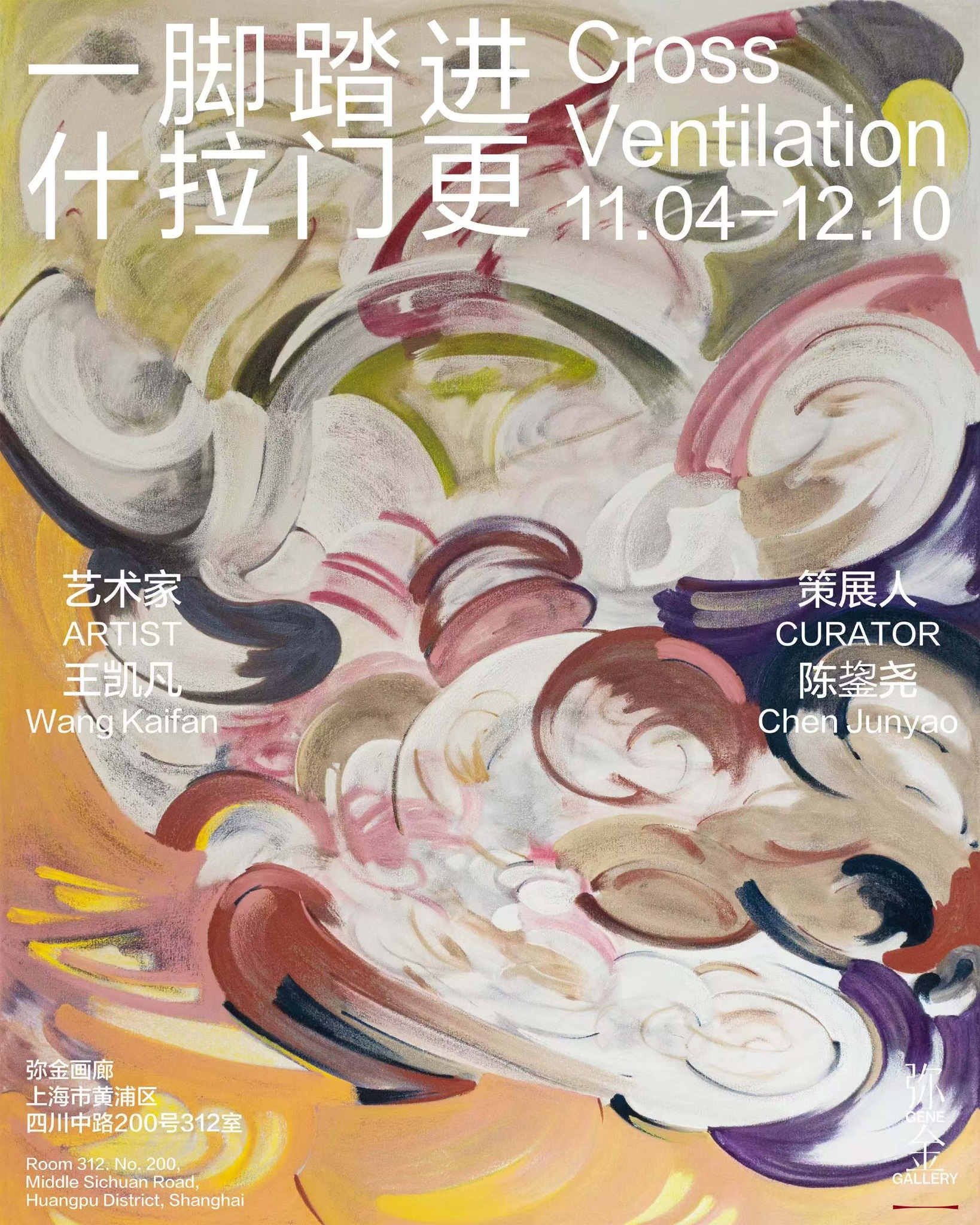
For the film in Kaifan Wang’s solo exhibition Cross Ventilation at Gene Gallery, Shanghai, I improvised on the pipa in response to sensations of wind, sand, decay and dispersal. Our shared hometown of Hohhot gave me a personal point of entry into the work’s materials and images.
With my left hand, I twisted two strings together using jiaoxian (绞弦) to create a rough, frictional timbre, and used sliding gestures to suggest wind. My right hand moved progressively from individual plucks and tremolo to sweeping strokes, drawing on the colour and resonance of all four strings to evoke wind and colliding stones.
Changes in rhythmic density, pauses and performing gestures organised these sensations into an audible thread through the images. The process led me to ask how personal experience of a place enters sound, and how that sound participates in a visitor’s understanding of moving images and exhibition space.
My contribution
Pipa improvisation & music creation
Artist
Kaifan Wang 王凯凡
Venue
Gene Gallery 弥金画廊 · Shanghai
Exhibition dates
–
Address
Room 312, 200 Middle Sichuan Road, Huangpu District, Shanghai Former German Post Office Building
Curator
Chen Junyao 陈鋆尧
The filmFull work, hosted by Studio Wang. Music by Xu Chang. Open on Vimeo ↗The film in the galleryAt Gene Gallery (弥金画廊), Shanghai, visitors stepped into a pool of plastic balls to watch the film and hear its music on a small monitor. Evoking windblown sand and a momentary loss of balance, the installation brought the viewer’s body into the encounter.
The exhibition takes its Chinese title from Xar mangh, a Hohhot neighbourhood whose Mongolian name refers to a yellow sandy area. Wang connects memories of home with his life in Berlin, reflecting on migration and urban change. Visitors step into ball-pit balls to reach the film, experiencing unfamiliar ground and a momentary loss of balance. My pipa improvisation brings another personal memory of Hohhot into this encounter.
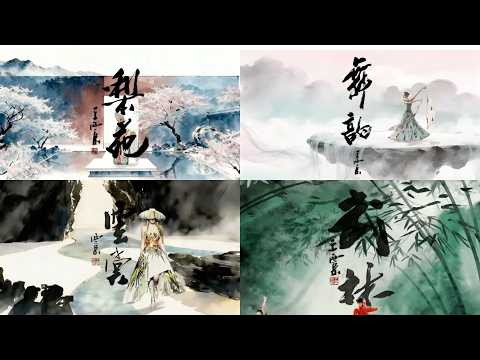
For Returning to Chang’an — Wang Xijing Art Exhibition at the National Art Museum of China, I contributed to the animation of paintings, video production and accompanying music.
The work brings movement and sound to paintings while keeping the original artist’s visual language at its centre.
My contribution
AI-assisted animation, video production & music
Original paintings
Wang Xijing 王西京
Presentation
National Art Museum of China, Beijing
Project date
About the artist and exhibition +
Wang Xijing is an acclaimed Chinese ink painter whose work spans historical narratives, literary subjects and contemporary figure painting. He holds China’s First-Class Artist professional title and has been recognised by the State Council as an expert with outstanding contributions.
Curated by Fan Di’an, his 2026 retrospective Returning to Chang’an at the National Art Museum of China brought together more than ten series. Through ink, line and colour, his practice connects the cultural traditions of Shaanxi with historical memory and contemporary life.
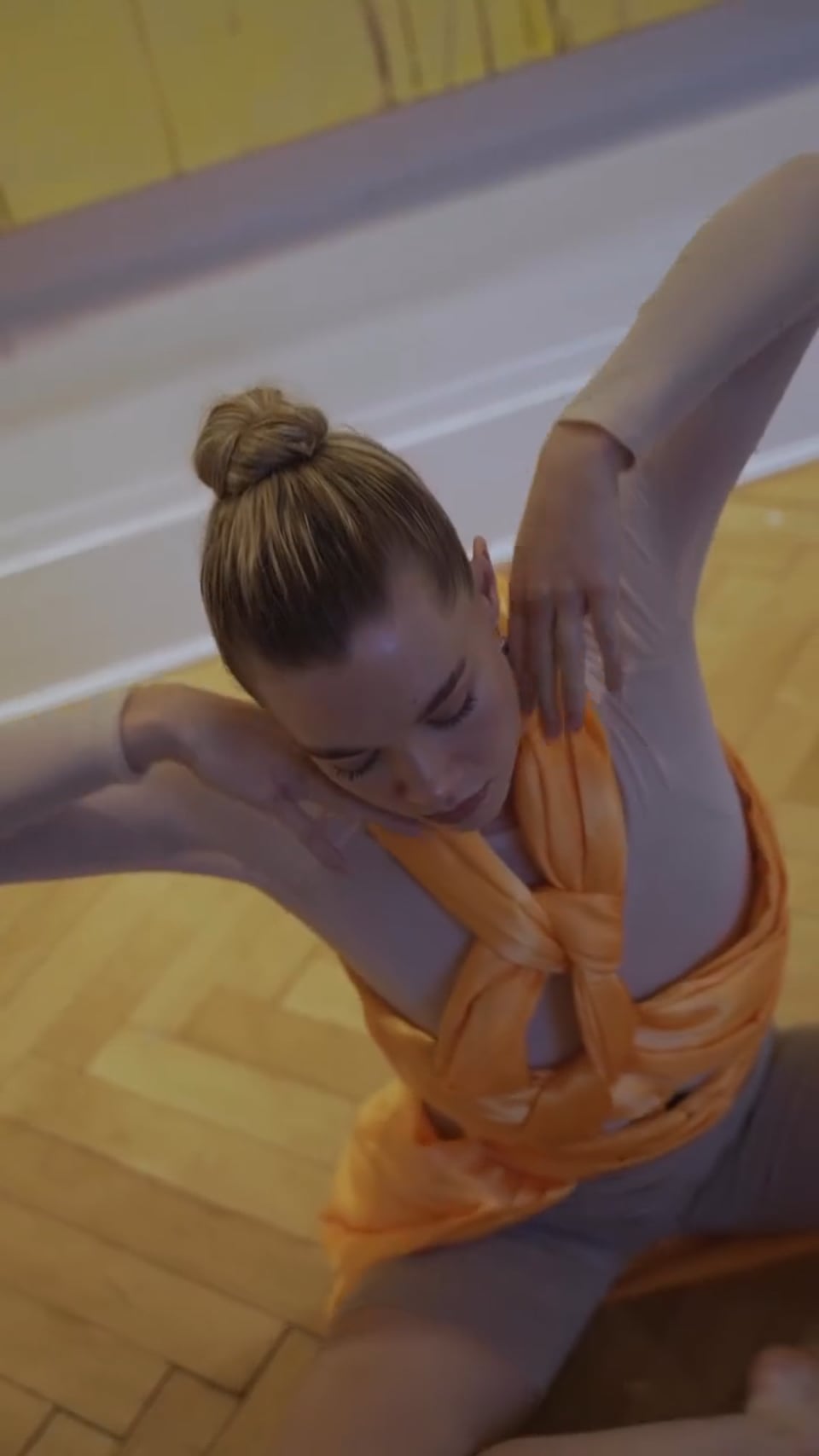
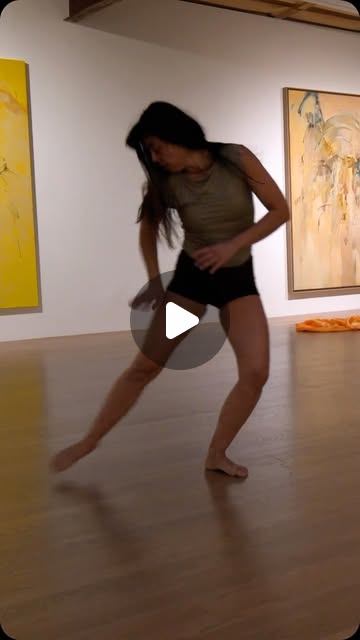
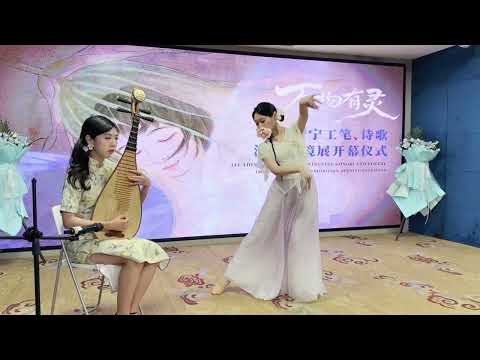
At the launch of Kaifan Wang’s first monograph at GNYP Gallery, Berlin, my composition formed the musical basis of a performance by dancer Shannon Walsh and guzheng (Chinese zither) player Zhiyuan Lou. The performance was conceptualised with Kaifan Wang.
Walsh’s improvised dance responded to the music and surrounding artworks. Together, composed music, live guzheng and movement brought the paintings into a shared performance space.
Music composition: Xu Chang. Performance by Shannon Walsh (dance) and Zhiyuan Lou (guzheng), conceptualised with Kaifan Wang. Event details follow the listing published by GNYPGallery on ArtRabbit.
At BLUM Los Angeles, dancers Gema Galiana and Emily Meister performed among Kaifan Wang’s paintings in his solo exhibition One Piece. Accompanied by my score Gold Amidst Dust, their improvised movement responded to the trajectories and gestures of his abstract works.
As the dancers moved between the paintings, the score connected painted gesture with the body in motion, creating a new encounter between music, painting and exhibition space.
Music: Xu Chang. Paintings: Kaifan Wang. Performance: Gema Galiana and Emily Meister. Film: Sai Tripathi. Documentation: BLUM. This is a separate presentation of the score also heard at GNYP Gallery, Berlin.
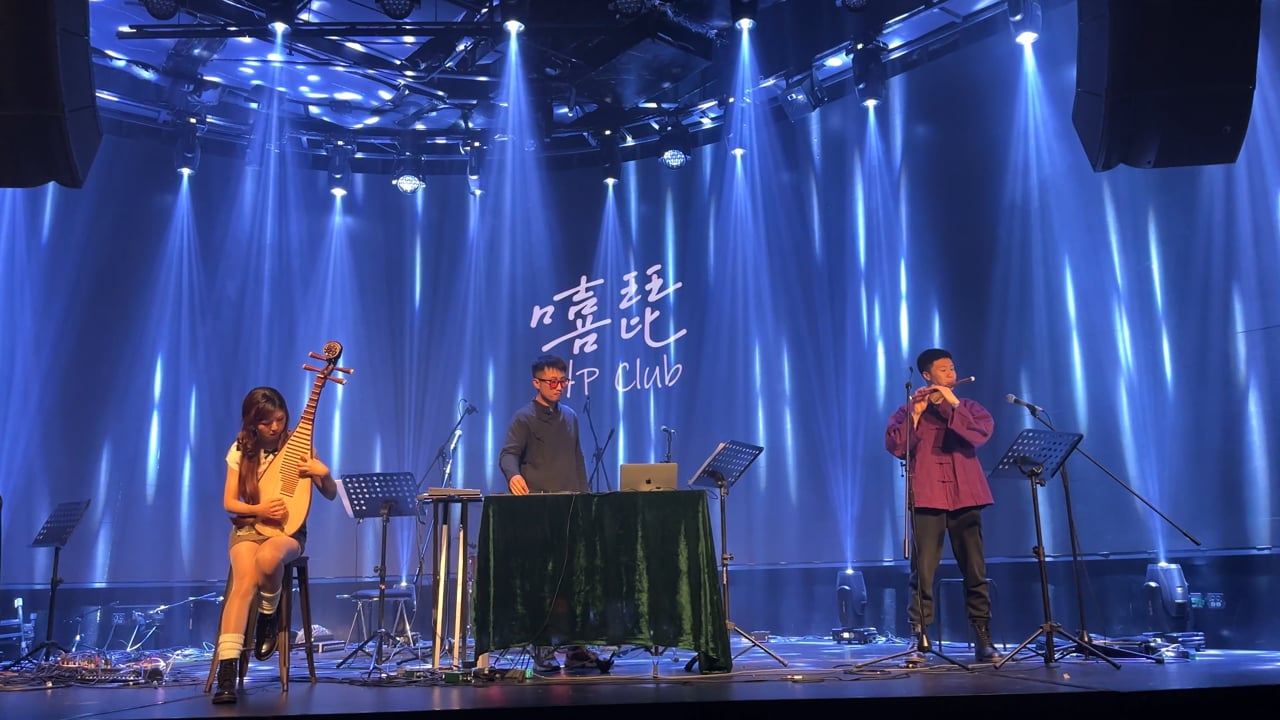
As Hip-Pipa Club’s pipa player, I performed at the “Folk on the Road” Music Festival at Jigong Mountain in Xinyang, Henan, in July 2023. I edited these highlights from four of the band’s original tracks, presenting the pipa within our live ensemble.
My right hand shapes the grain, resonance and dynamic weight of each note, while left-hand vibrato, string bends and rapid register changes keep the melodic line flexible. Against electronic production and the dense rhythms of Chinese drums, the pipa contributes both rhythmic definition and a shifting, expressive pitch. This performance explores how its traditional techniques can find a place within a contemporary band.
In this filmWalking on the Moon · Jazz Hiphop · Drunken Beauty (美人醉) · No Inquiry of Karma (无问因果)
Hip-Pipa Club takes its name from hip-hop and pipa. The band brings pipa, bamboo flutes and rap into dialogue with electronic production, drawing on drill, jazz hip-hop, neo-soul and melodic dubstep, alongside R&B and rock. As its pipa player, I explore how the instrument’s articulation, pitch inflection and resonance can contribute to these shared arrangements.
2023年7月,我作为嘻琵俱乐部的琵琶成员,参加了在河南信阳鸡公山举办的“民谣在路上”音乐节。本集锦由我剪辑,收录《Walking on the Moon》《Jazz Hiphop》《美人醉》《无问因果》四首乐队原创作品的现场片段。演奏中,我通过右手弹奏塑造声音的颗粒感、余韵与力度层次,以左手揉弦、拉弦和快速换把、音区跳进保持旋律的流动。在电子音乐与中国大鼓的密集节奏中,琵琶既参与节奏的推进,也以富于弹性的音高与音色变化展开旋律,呈现传统乐器在当代乐队语境中的表达。
Original works: Hip-Pipa Club. Pipa performance and video editing: Xu Chang.
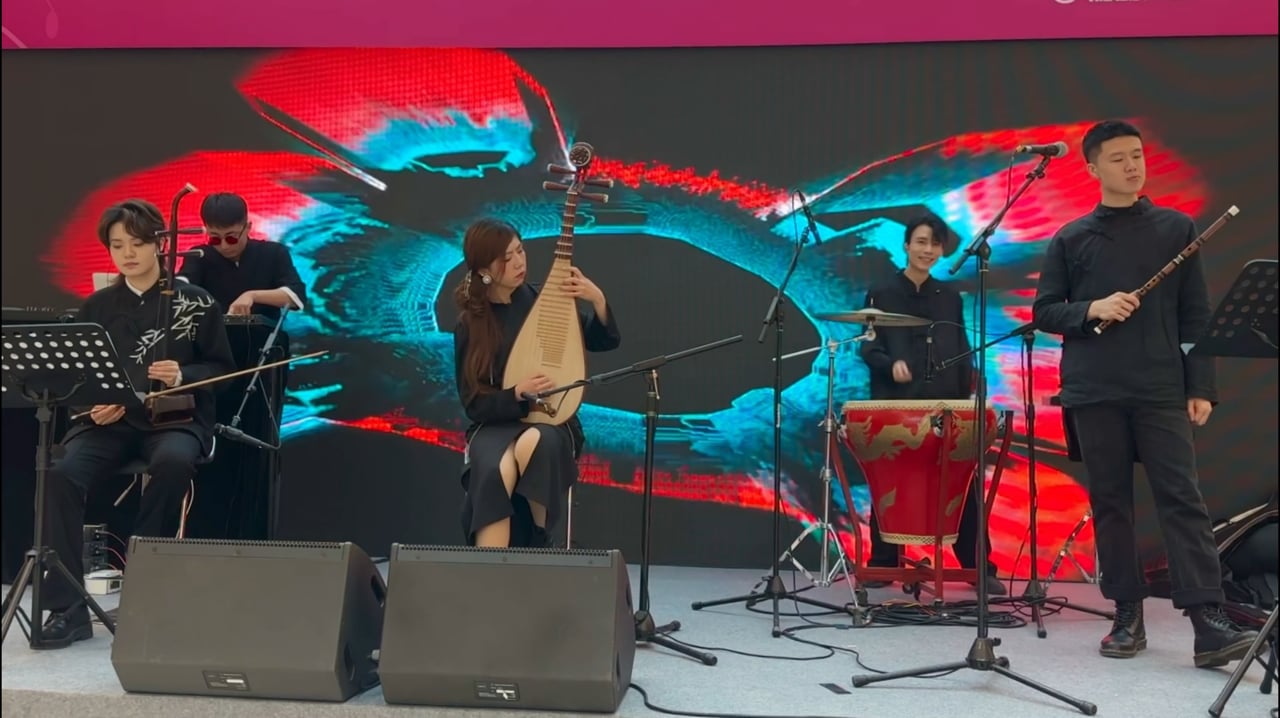
As Hip-Pipa Club’s pipa player, I performed Nine-Tier Heavenly Gate at the “Authentic Chinese Wave” showcase at Imagination Space Livehouse, Beijing, in August 2023.
Sliding gestures create flowing, less clearly pitched textures, while semitone movement builds tension. I use these contrasts to move between a sense of expansion and compression. The changing colour of the pipa interacts with the ensemble, giving the instrument a distinct presence within the band and opening new expressive possibilities for its traditional techniques.
This excerpt from Hip-Pipa Club’s original work Tiny Sparks was recorded at Wukesong Wanda Plaza in Beijing in January 2024. It features my pipa solo within the band’s live set.
Here I focus on the pipa as a solo voice within a band arrangement: shaping phrasing, articulation and dynamics so that the instrumental line can come forward while remaining connected to the ensemble.
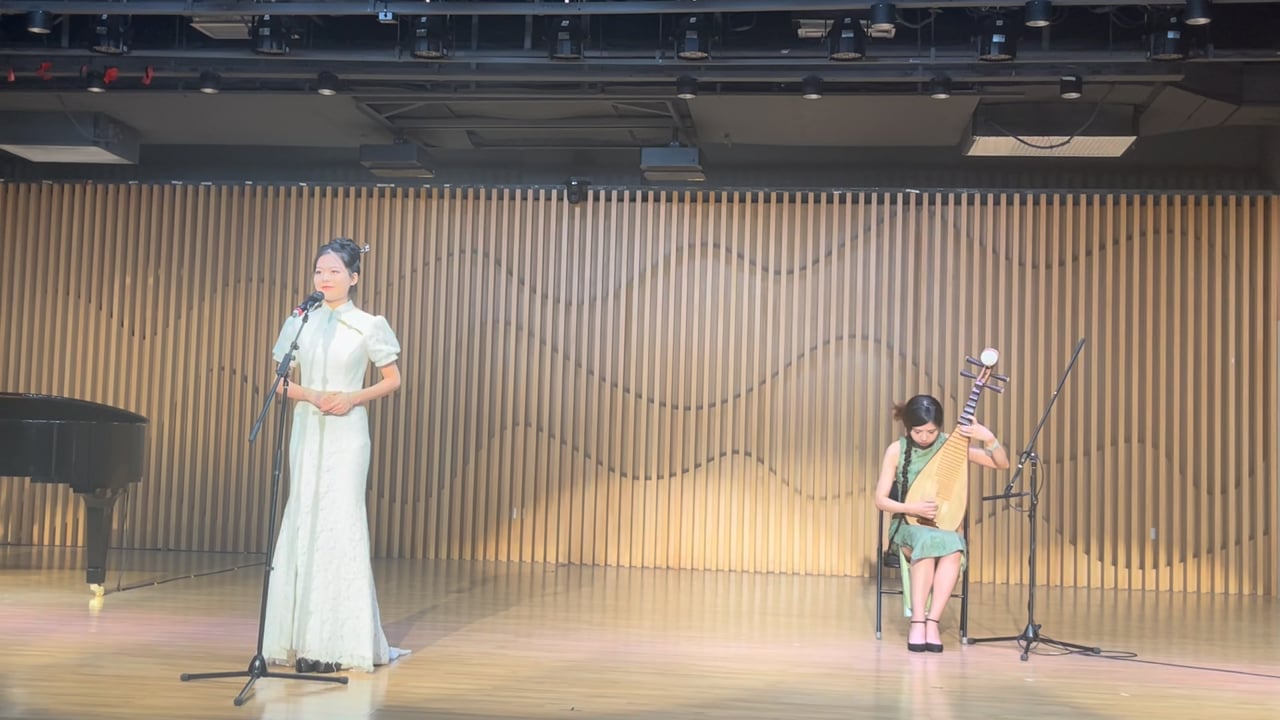
At the Communication University of China Concert Hall in Beijing, I added and performed a pipa part for Xu Jingxin’s soprano vocal capriccio Moonlit Night on the Spring River, working with its existing voice-and-piano setting.
The soprano leads. I follow the singer’s breath and phrasing, combining crisp articulation with lingering resonance so that the pipa blends with the voice while retaining a distinct timbre. The piano provides a harmonic and textural frame.
Drawing on Beijing-opera banyan—the organisation of accented and unaccented beats—I use rhythmic emphasis and changing intensity to support the music’s successive rises and releases. This arrangement explores how the language of a traditional pipa piece can take on new life through a dialogue between three performers.
Rooted in the pipa work Xiyang Xiaogu (Flute and Drum at Sunset), Moonlit Night on the Spring River has taken different forms across Chinese instrumental and vocal traditions. Xu Jingxin’s vocal capriccio brings traditional melodic character into dialogue with agile coloratura writing for soprano. My pipa part was added to the existing soprano-and-piano setting for this performance.
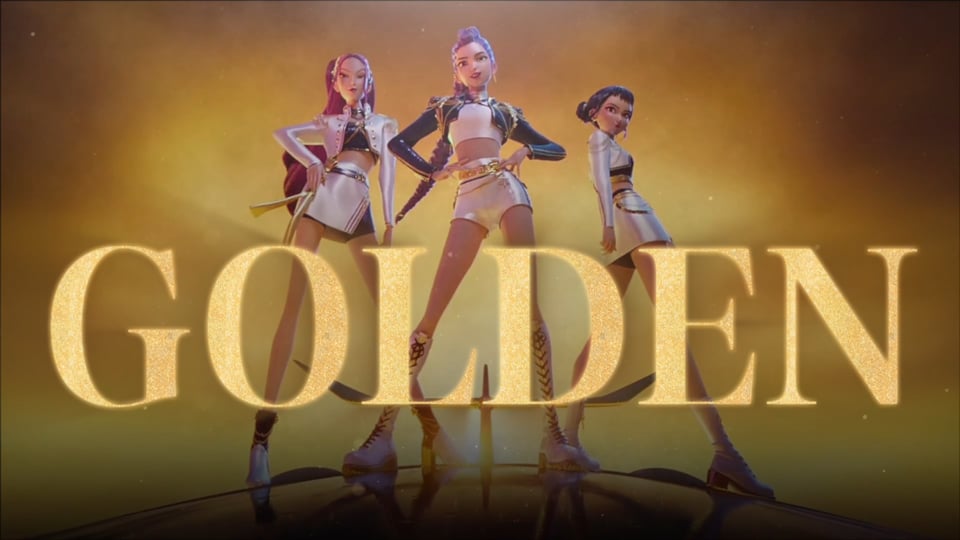
Seeing a lute in the animated film KPop Demon Hunters inspired me to reinterpret “Golden” through the Chinese pipa.
I find the pipa’s crisp, percussive articulation especially suited to rap-like phrasing and densely packed syllabic rhythms. Through changes in attack, rhythmic accents and tone, I translate the energy of the vocal line into instrumental playing.
This is a pipa cover of an existing song. Original music and associated film imagery belong to their respective rights holders. Pipa performance: Xu Chang.
A pipa cover of Guan Dazhou’s “He Huan”, from the music for National Treasure (国家宝藏). The performance connects my work with a traditional instrument to my interest in television’s musical expression.
Original composition: Guan Dazhou. Original music rights remain with the respective rights holders. This recording is a pipa cover performed by Xu Chang.
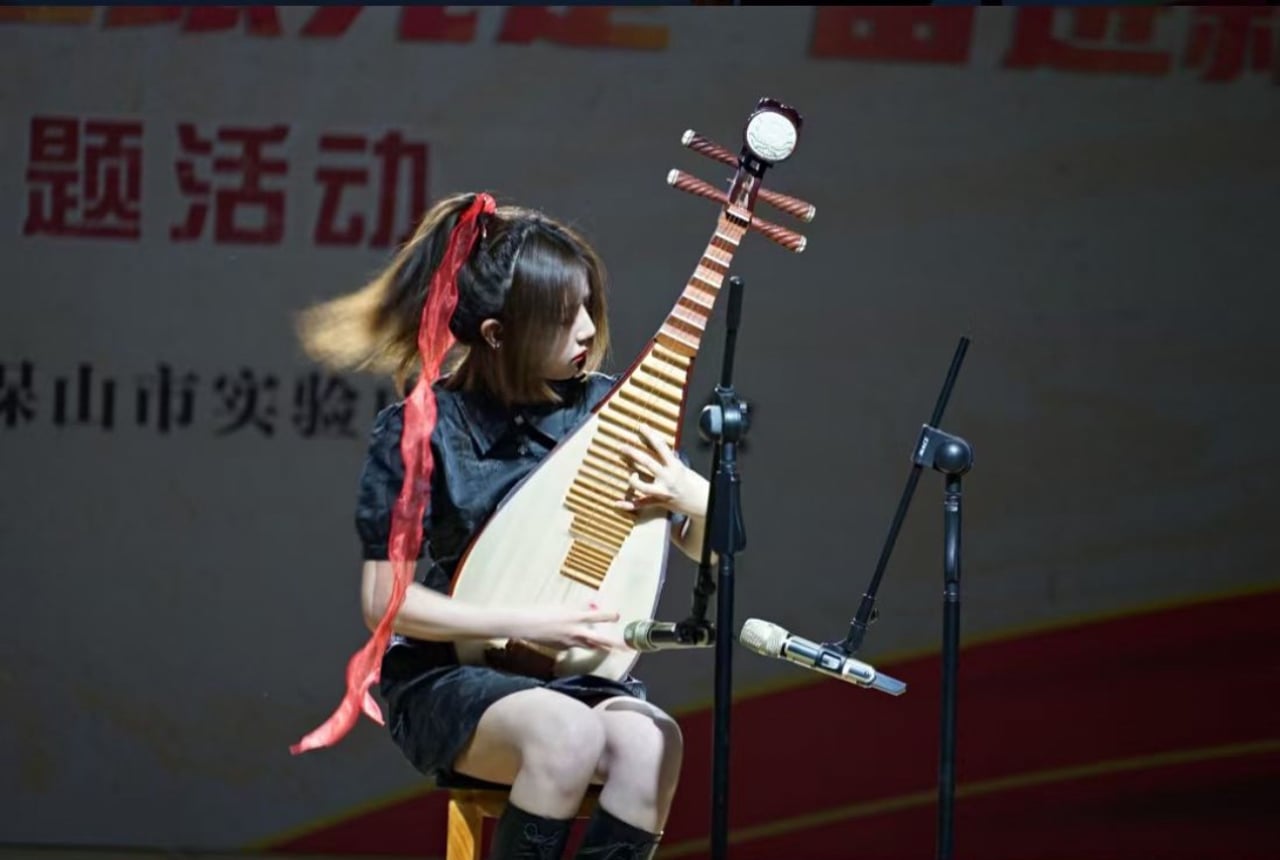
In May 2022, during my year of volunteer teaching at Baoshan Experimental Middle School in Yunnan, I performed the pipa classic Ambush from Ten Sides for students and teachers at the school’s May Fourth choral competition. This film brings together the live performance and moments behind the scenes.
I also served as the event’s live sound director, coordinating stage sound alongside my own performance. Bringing the pipa into this school setting connected music teaching with the practical work of presenting a live event.
Through the solo, I hoped to give students a close encounter with the instrument’s expressive range and dramatic storytelling, and encourage their interest in traditional Chinese music. The experience continues to inform how I think about performance as part of education and community life.
My contribution
Pipa solo & live sound direction
Date
Place
Baoshan Experimental Middle School · Yunnan
Event
May Fourth choral competition
Context
Volunteer music teaching; school arts event
Performance & backstage film · 1 min 28 sec · Open on Vimeo ↗
This short animation follows four people through strange and playful dreams. My contribution was sound effects design within the film’s wider production team.
My contribution
Sound effects design
Film recognition
Jury Special Mention, Super Short Unit, 16th FIRST International Film Festival
Original film hosted on Bilibili · Chinese platform interface. English synopsis and contribution statement above.
Animation authors credited by the source: Wang Kexin, Zhang Yangminhui and Li Runyu. Xu Chang: sound effects design. The festival recognition belongs to the film.
05 / Research
The questions behind the practice
My research explores screen media, music and sound culture, and the cultural industries. Through creative practice and audiovisual analysis, I examine how traditional music is reimagined across contemporary media and cultural settings.
01
Traditional music on contemporary stages
How do performance, arrangement and television presentation change the way traditional instruments enter popular culture?
02
Sound, image and cultural memory
How can music shape our encounter with a place or an artwork, beyond what the image alone can show?
03
Cultural experiences across media
How do new technologies and cultural production models reshape encounters with sound across screens, exhibitions and immersive settings?
Selected theses
Research across traditional music, television and audiovisual relationships.
Master’s thesis /
New Media Communication Strategies of the China National Traditional Orchestra
M.A. in Music · Communication University of China
Through content analysis, literature review and fieldwork, this study examines how the orchestra communicates traditional Chinese music across domestic and international digital platforms.
Communication Strategies of Chinese Television Music Reality Shows: A Case Study of Singer
B.A. in Radio and Television Directing · Communication University of China
Using literature review, case study and content analysis, this thesis examines Singer’s communication strategies and challenges within China’s television music reality landscape.
Music–Image Counterpoint in Twentieth-Century Cinema: A Comparative Study of Schindler’s List and Not One Less
B.A. in Musicology · Communication University of China
A comparative study of Schindler’s List and Not One Less, examining how contrasts between music and image contribute to emotional expression, characterisation and thematic meaning.
Researcher and writer on a National Social Science Fund of China arts project on the formal structure of Chinese folk instrumental music.
Contributing writer for the “Radio Music Programs” chapter of China Radio and Television Compendium (Radio Volume), with responsibility for representative works and archival research.
Research and communication for immersive cultural tourism projects and the “Immersive City” platform.
Research on young short-form drama practitioners in Beijing.
06 / Biography & experience
A background in music and media
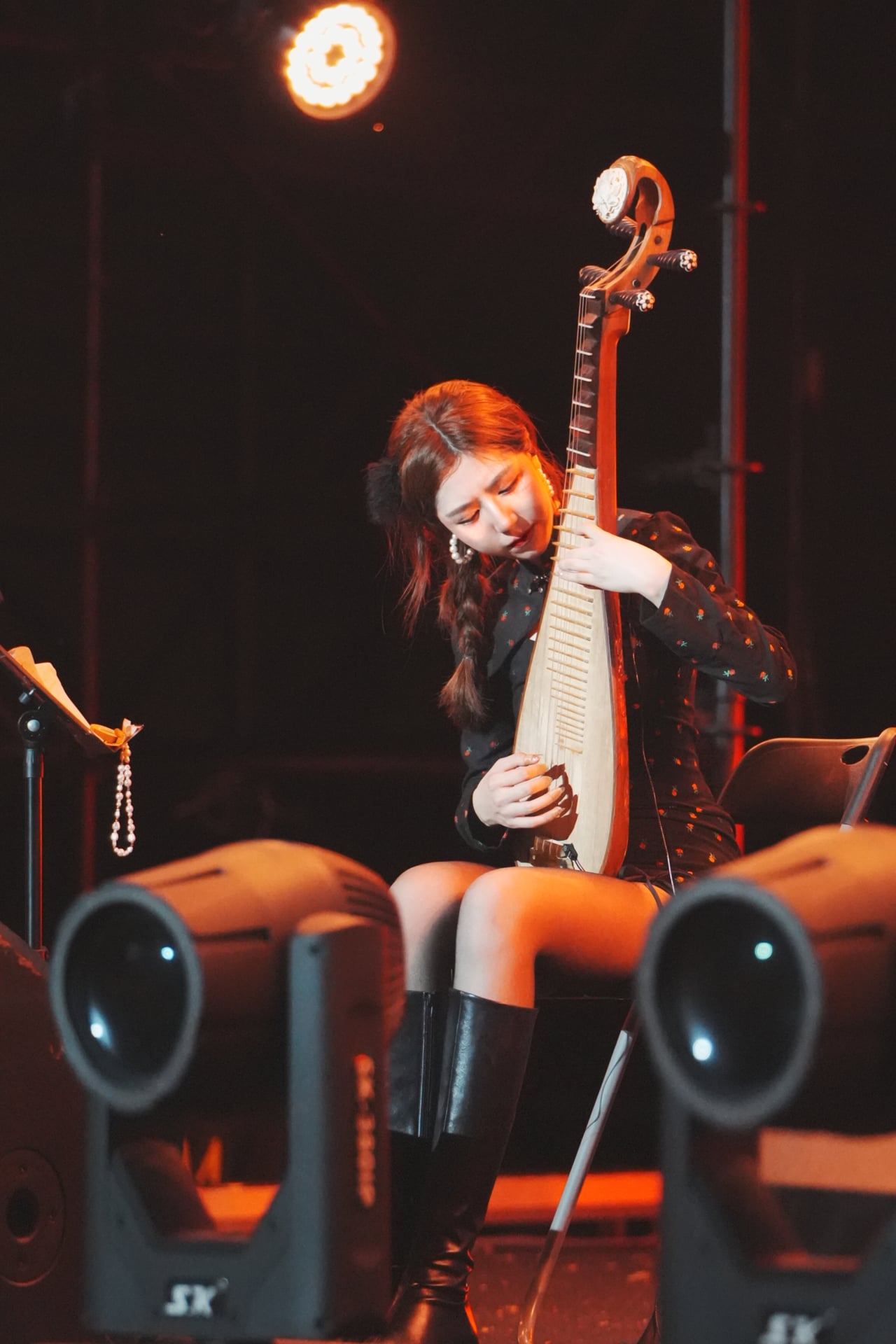
Xu Chang with the pipa
Xu Chang is a pipa performing artist, music and sound creator, and doctoral researcher at the Communication University of China. Her research explores screen media, music and sound culture, and the cultural industries.
Her artistic practice spans contemporary interpretations of traditional Chinese music, experimental collaborations with popular music, original music for art exhibitions, sound design for moving images, and digital art. She is particularly interested in how traditional music can be reimagined through contemporary audiovisual media and interdisciplinary artistic practice.
Drama, Film and Television · Communication University of China
2022–2024
M.A. in Music
Media Music · Communication University of China
2018–2020
Dual B.A.
Radio and Television Directing · Communication University of China
2017–2021
B.A. in Musicology
Communication University of China
Beyond the individual work
Concert production
Executive director and creative coordinator for Huangzhong Dalu, China National Traditional Orchestra. Project assistant at the National Centre for the Performing Arts.
Broadcast & live events
Directing and music roles across Hunan TV and Beijing TV galas. Production work at the Beijing International Film Festival.
Cultural research & communication
Research assistant in cultural industries management. Content development and project communication for immersive cultural tourism.
Teaching & participation
A year as a volunteer music teacher in Baoshan, Yunnan. Music and arts education projects in Beijing and Inner Mongolia.
07 / Next conversations
Let’s make something worth listening to.
I am seeking visiting research opportunities and artistic collaborations across traditional music, sound and screen media. I can contribute music or performance to an existing project, or develop a new work together.